The trade agreement opens up a market of 700 million consumers. For the footwear and leathergoods industry, success will depend on who is able to move fastest.
EU–Mercosur: 700 million consumers. Who is already positioned to reach them? Those taking part in Expo Riva Schuh and Gardabags.
While diplomats and bureaucrats fine-tune the paperwork, some have already built bridges between Europe and South America. The agreement between the European Union and Mercosur – Argentina, Brazil, Paraguay and Uruguay – promises to create the largest free trade area in the world. Tariffs will be eliminated on over 90% of goods, with estimated savings of €4 billion per year for European exporters.
«We are creating a market of unprecedented and significant scale,» said Ursula von der Leyen following the vote on 9 January 2026. The figures speak for themselves: EU exports to Mercosur could increase by €50 billion by 2040.
But here’s the point: treaties take time; opportunities don't wait. Final ratification is still pending, at least for the trade component of the agreement, but for the footwear and leathergoods industries the real challenge is not waiting for tariffs to fall – which currently reach up to 35% in Mercosur countries – but in establishing a competitive lead. This is where companies with a long-standing focus on internationalisation step in.
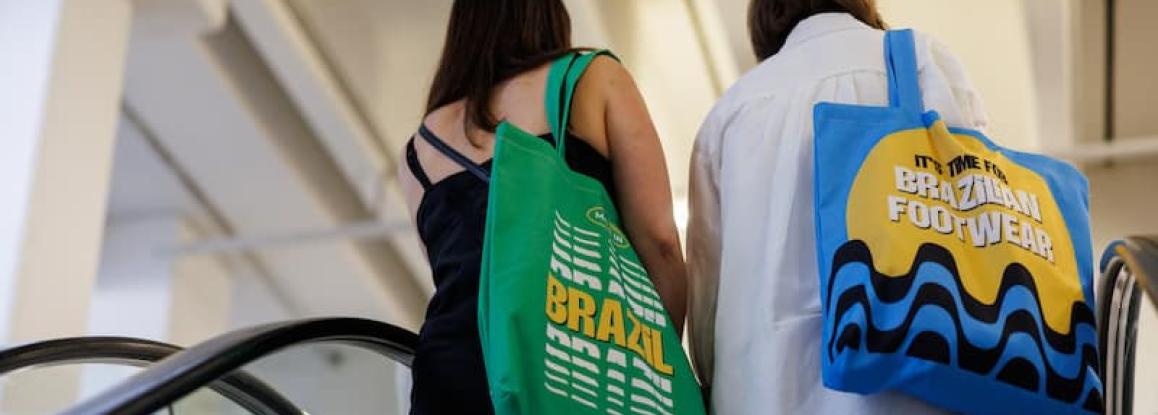
Expo Riva Schuh and Gardabags now represent the key commercial hub already connecting manufacturers and buyers from both continents. Across the last three editions, more than 100 buyers from Mercosur have taken part; at the most recent edition, over 30 South American exhibitors presented their collections. Not projections, but facts.
While the agreement awaits final sign-off, the Riva del Garda trade fair already offers the chance to secure privileged market positions and capitalise on future opportunities: direct access to distribution networks, tangible commercial relationships and diversification of supply chains.

